Top Scorers
Top Assists
Referees
Top Cards
Teams
FriendliesAll 421 teams competing in the Friendlies 2026 season. Click any club to view their full squad, match history, and detailed statistics.
 Belgium
 France
 Croatia
 Russia
 Sweden
 Brazil
 Uruguay
 Colombia
 Spain
Spain England
 Panama
 Japan
Japan Senegal
 Serbia
 Switzerland
 Mexico
 South Korea
 Iceland
 Nigeria
 Australia
 Denmark
 Iran
Iran Saudi Arabia
 Poland
 Germany
 Argentina
 Portugal
 Tunisia
 Costa Rica
 Peru
Peru Morocco
 Egypt
Egypt Wales
Wales Italy
Italy Hungary
 Czechia
 Northern Ireland
 Ukraine
 Slovakia
 Romania
 AustriaRep. Of Ireland
 Türkiye
 Albania
 Norway
 Slovenia
 Gibraltar
 Armenia
 Kazakhstan
 Azerbaijan
 Lithuania
 Faroe Islands
 Finland
 Belarus
 Luxembourg
 Bulgaria
 Georgia
 FYR Macedonia
 Cyprus
 Liechtenstein
 Scotland
 Montenegro
 Andorra
 Kosovo
 MaltaBosnia & Herzegovina
 Moldova
 San Marino
 Israel
 Greece
 Netherlands
 Tanzania
 Madagascar
 Mauritania
 Gambia
 Malawi
 Mauritius
 Sierra Leone
 Mali
Mali Ivory Coast
 Burkina Faso
 Ghana
Ghana Niger
Niger Ethiopia
 Zambia
 DR Congo
 Guinea
 Sudan
Sudan Kenya
Kenya Mozambique
 Guinea-Bissau
 Rwanda
 Benin
Benin Lesotho
 Uganda
 Botswana
 Equatorial Guinea
 Zimbabwe
 Comoros
 Liberia
 Libya
Libya Central African Republic
 Burundi
 Angola
 South Africa
 AlgeriaCape Verde Islands
 Togo
Togo Djibouti
 Tajikistan
 India
India Turkmenistan
 Bhutan
 Vietnam
 Cambodia
 Singapore
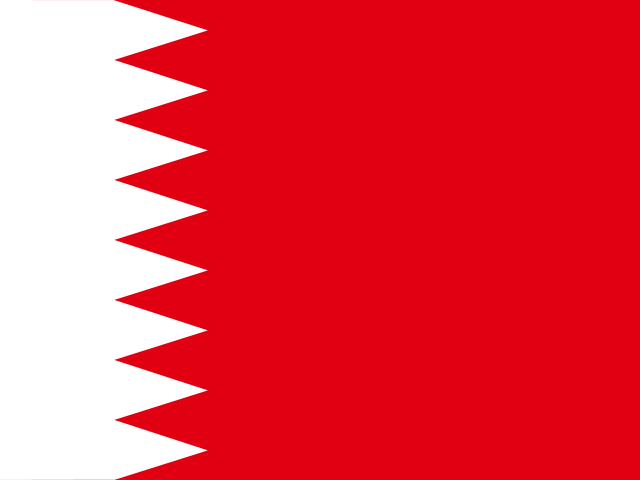 Bahrain
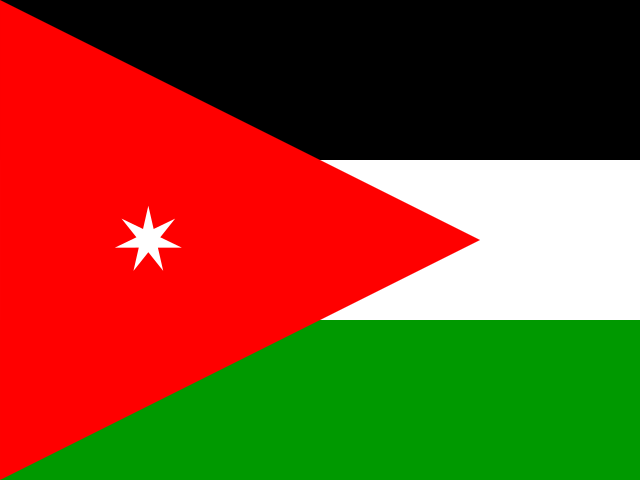 Jordan
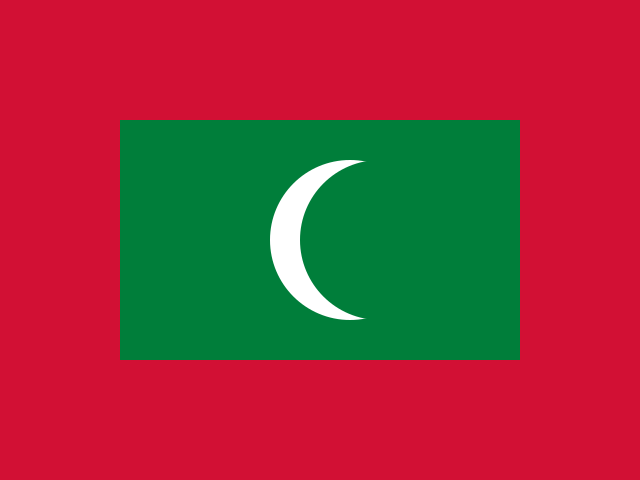 Maldives
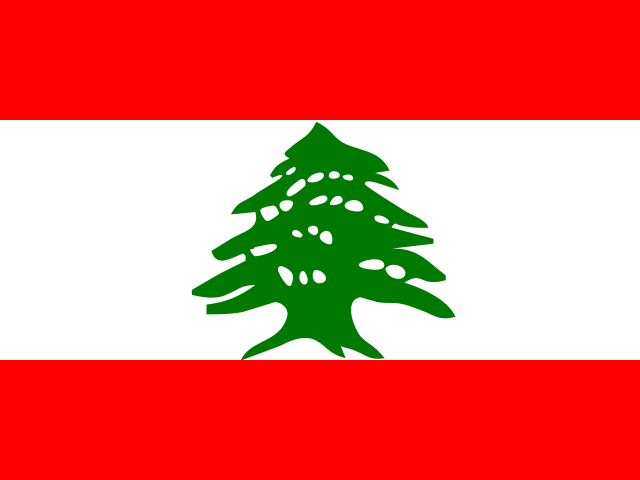 Lebanon
 Oman
Oman Afghanistan
 Kyrgyzstan
 Philippines
 Myanmar
 Bangladesh
 Palestine
 United Arab Emirates
 Thailand
 Syria
Syria China
China Iraq
Iraq Uzbekistan
 Qatar
Qatar Kuwait
 IndonesiaLos Angeles GalaxyMinnesota United FCDC UnitedLos Angeles FCFC UrartuClub Tijuana
 Venezuela
 Paraguay
 Bolivia
 Ecuador
 Chile
Chile USA
USA Jamaica
 HaitiGangwon FCPhiladelphia Union IILas Vegas LightsLouisville CityPakhtakor
 Hong Kong
 Honduras
 New Zealand
 Bermuda
 El Salvador
 Fiji
Fiji Guatemala
 Nicaragua
 Sri Lanka
 Trinidad and Tobago
 Vanuatu
 Antigua and Barbuda
 Canada
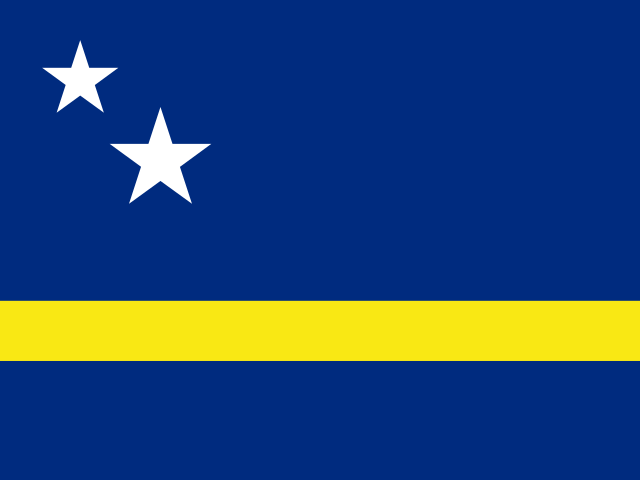 Curaçao
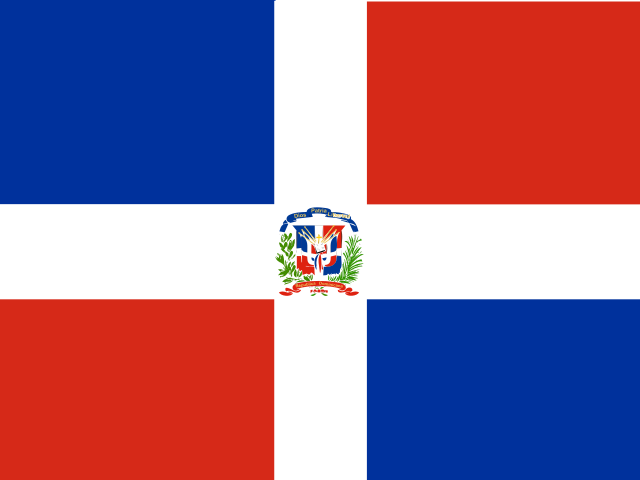 Dominican Republic
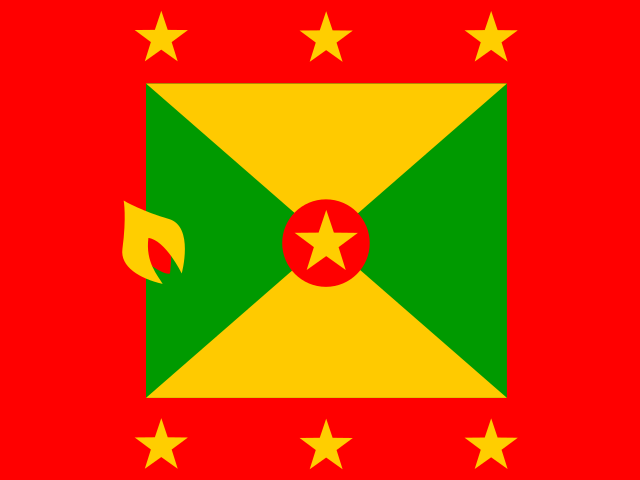 Grenada
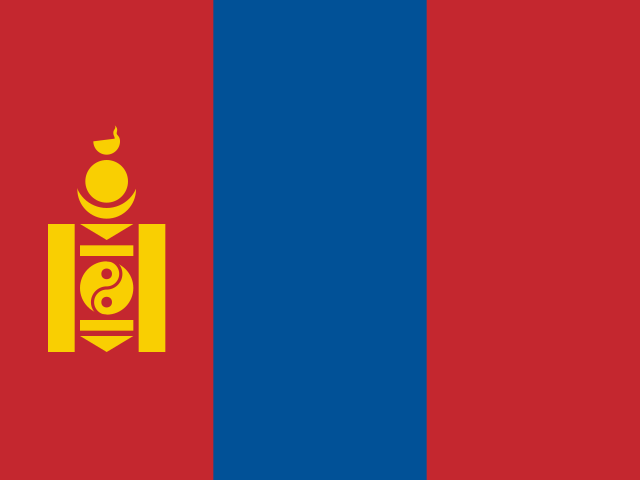 Mongolia
 Pakistan
 Puerto RicoSiheung CitizenLusail City
 Martinique
 Guam
Guam ArubaBritish Virgin IslandsCayman IslandsAlbania U21Azerbaijan U21Belarus U21Belgium U21Bulgaria U21Croatia U21Cyprus U21Finland U21Georgia U21Greece U21Israel U21Italy U21Kazakhstan U21Kosovo U21Liechtenstein U21Luxembourg U21Malta U21Moldova U21Montenegro U21Netherlands U21North Macedonia U21Northern Ireland U21Norway U21Portugal U21Republic of Ireland U21Russia U21Serbia U21Sweden U21Turkey U21Ukraine U21Slovenia U21Yongin CityJapan U23Korea Republic U23Morocco U23UAE U23Algeria U23Iraq U23Argentina U20Colombia U20Italy U20Mexico U20Nigeria U20Panama U20Qatar U20Saudi Arabia U20United States U20Uruguay U20Costa Rica U20England U20Austria U19Belgium U19Bulgaria U19Croatia U19Czechia U19Denmark U19England U19Germany U19Iceland U19Italy U19Latvia U19Netherlands U19North Macedonia U19Norway U19Portugal U19Russia U19Slovakia U19Spain U19Turkey U19Wales U19Albania U19Bosnia-Herzegovina U19Cyprus U19Estonia U19Greece U19Israel U19Lithuania U19Republic of Ireland U19Bangladesh U23China PR U23India U23Jordan U23Korea DPR U23Kyrgyz Republic U23Oman U23Qatar U23Tajikistan U23Thailand U23Uzbekistan U23Vietnam U23BonaireCuba U20El Salvador U20Grenada U20Guatemala U20Haiti U20Jamaica U20St. Vincent / Gren. U20Trinidad and Tobago U20Algeria U20Benin U20
Past Seasons
FriendliesBrowse 10 archived seasons of the Friendlies, from 2017 to 2026. Each season page includes full standings, top scorers, and match results — useful for comparing historical performance and identifying long-term betting patterns.
History
International friendlies represent the oldest form of organized international football competition, originating when Scotland faced England on 30 November 1872 at Hamilton Crescent in Glasgow—a match watched by 4,000 spectators that established the template for international fixtures. Throughout the late 19th and early 20th centuries, friendlies were the primary vehicle through which nations tested their footballing prowess, with matches serving both competitive and diplomatic purposes. The advent of the FIFA World Cup in 1930 transformed friendly matches into preparation tools rather than standalone competitions, though they retained their cultural and developmental significance. Modern friendlies have evolved to accommodate dense tournament schedules, serving as training grounds for emerging players, tactical experimentation platforms, and opportunities for nations to build competitive depth ahead of World Cups, continental championships, and Olympic tournaments. The introduction of official FIFA ranking points in 1999 formalized the competitive element of friendlies while maintaining their non-binding character.
- 1872 — Scotland defeats England 0–0 in the world's first international football match in Glasgow
- 1930 — FIFA World Cup launches, transforming friendlies from primary competitions into preparation matches
- 1999 — FIFA begins awarding ranking points to international friendlies, formalizing competitive recognition
- 2001 — Australia defeats American Samoa 31–0, setting the all-time record for largest victory in international football
- 1950s–1960s — Friendlies become essential preparation tools ahead of World Cups and continental championships
- 2020s — Nations use friendlies strategically to develop depth and test formations ahead of major tournaments
Competition Format
International friendlies operate without a formal league structure or standings table. Matches are organized bilaterally between national teams on dates designated by FIFA (typically March and September international windows, with additional fixtures during summer breaks). Each match is contested as a standalone event under standard Laws of the Game, with teams earning three points for a win and one for a draw. No relegation or promotion mechanisms exist, as friendlies serve preparation and diplomatic functions rather than competitive advancement. Friendlies award FIFA ranking points using a modified calculation that weights them less heavily than competitive matches, allowing nations to experiment tactically and develop squad depth without jeopardizing their competitive standings.
Records
The 2001 match between Australia and American Samoa produced the largest goal margin in international football history, with Australia's dominant performance yielding 31 goals in a World Cup qualifier. Friendlies have historically produced exceptional goal-scoring displays due to the participation of developing nations and the experimental nature of team selections.
Analysis
Current Season Analysis
International friendlies in the 2024/25 season reflect the compressed global football calendar, with nations strategically scheduling matches ahead of the final stages of 2026 FIFA World Cup qualification across all six confederations. Leading nations including France, Argentina, England, and Spain have used friendlies to test tactical formations, integrate emerging talent, and maintain squad cohesion between domestic club campaigns. The fixture congestion has intensified the importance of friendly matches as player development platforms, with coaches rotating squads extensively to manage fatigue and identify depth options for tournament play.
Title contenders and top-ranked nations have leveraged friendlies to fine-tune their systems ahead of World Cup qualification climaxes. Brazil, Germany, and Belgium have prioritized matches against competitive opponents to simulate tournament conditions, while emerging nations have used friendlies to build consistency and tactical discipline. The variance in opponent quality—ranging from established European powers to developing confederations—provides valuable data on team performance across different competitive scenarios, with nations analyzing metrics including possession efficiency, defensive solidity, and conversion rates to inform tactical adjustments.
The relegation concept does not apply to international friendlies, but the competitive implications are substantial. Nations performing poorly in friendlies ahead of World Cup qualification risk momentum loss, confidence erosion, and delayed tactical implementation heading into critical qualifying matches. Standout performers in the 2024/25 season include rising talents integrated into senior squads through friendly opportunities, with young players using matches to establish international credentials and press claims for World Cup selection. The experimental nature of friendly lineups has produced unexpected performances, with second-string squads occasionally outperforming established combinations, challenging coaching philosophies and forcing tactical recalibration.
Unexpected storylines have emerged from the season's friendly calendar, including shock results involving lower-ranked nations capitalizing on rotated lineups from higher-ranked opponents, and the strategic use of friendlies by nations to address specific tactical vulnerabilities identified in World Cup qualification. Several nations have employed friendlies to test new formations and positional experiments, with some matches serving as comprehensive auditions for players on the periphery of World Cup consideration. The scheduling flexibility of friendlies has also enabled nations to respond to injury crises by integrating replacement players and building cohesion in compressed timeframes—a critical advantage heading into the high-stakes final qualification phases.
The Evolution and Strategic Importance of International Friendlies
International friendlies occupy a unique position in modern football, serving as essential bridges between domestic club football and international tournament preparation. Unlike competitive matches where every decision carries immediate consequences for tournament qualification or ranking advancement, friendlies provide coaches with the laboratory conditions necessary to implement tactical innovation, develop squad depth, and prepare players for the intensity of major tournaments. The strategic value of friendlies has increased substantially in the modern era, where fixture congestion and injury management have become critical factors in competitive success.
The role of friendlies in player development cannot be overstated. Young talent benefits from exposure to international football at the highest level without the pressure of competitive qualifying campaigns, allowing players to acclimate to the pace, intensity, and tactical demands of international football. Nations have increasingly used friendlies to integrate academy graduates into senior squads, with matches providing crucial first-team experience and confidence-building opportunities. This development pathway has become especially important for nations rebuilding after tournament disappointments or managing generational transitions, with friendlies serving as testing grounds for emerging talent destined for World Cup squads.
Tactical experimentation represents another critical function of international friendlies. Coaches use matches against varied opposition—ranging from similarly-ranked competitors to developing nations—to test different formations, pressing intensities, and positional innovations. The lower stakes of friendlies compared to competitive qualifying allow for bolder tactical experimentation, with coaches willing to risk unconventional approaches in the knowledge that results carry reduced competitive consequences. This willingness to innovate in friendlies has historically preceded major tactical shifts in international football, with successful experiments in friendlies often becoming foundational to tournament performance.
The commercial and diplomatic dimensions of international friendlies extend their significance beyond pure sporting considerations. High-profile friendlies between major nations generate substantial broadcast revenue and sponsorship interest, with matches often scheduled to maximize global audience reach and prime-time television slots. Friendlies also serve diplomatic functions, with matches between nations occasionally carrying geopolitical significance and contributing to international relations through sporting engagement. The flexibility of friendly scheduling enables nations to accommodate tour matches that strengthen bilateral football relationships while generating revenue for national football associations.
Records and Historical Significance
The historical record of international friendlies documents the evolution of global football from the 1872 Scotland-England match through to the modern era. The early international friendlies established the template for international football competition, with matches between British nations in the late 19th century providing the foundation for FIFA's subsequent development of competitive international football structures. The expansion of international friendlies to encompass nations beyond Europe—particularly following the founding of the FIFA World Cup in 1930—transformed friendlies into vehicles for global football development and the identification of emerging footballing powers.
Individual performance records in international friendlies reflect the exceptional talent that has graced international football across generations. Cristiano Ronaldo holds the all-time record for international goals with 143 goals across all competitions, with a significant portion scored in friendly matches throughout his career. Pelé established legendary scoring records in international friendlies during the 1950s and 1960s, with documented friendly goals exceeding 100 across his career with Brazil. These scoring records underscore the quality of opposition faced in friendlies, with matches often featuring developing nations or experimental lineups that have historically conceded higher goal volumes than competitive matches.
The extraordinary goal-scoring displays in international friendlies—most notably Australia's 31–0 victory over American Samoa in 2001—illustrate the variance in competitive quality across FIFA membership. The Australian match has become the benchmark for friendly match anomalies, with the scoreline reflecting the vast gulf in footballing development between established nations and emerging confederations. Such extreme results have prompted discussions within FIFA regarding scheduling protocols and competitive balance, though friendlies remain open to all member nations regardless of ranking or recent competitive record.
Global Participation and Accessibility
The inclusive nature of international friendlies—with all 211 FIFA member nations eligible to participate—makes them the most universally accessible form of international football competition. This accessibility has enabled smaller nations and developing confederations to gain regular exposure to higher-ranked opponents, providing invaluable development opportunities and competitive experience. Nations such as American Samoa, Gibraltar, and Liechtenstein have used friendlies as platforms to develop their footballing infrastructure and build squad cohesion, with matches serving essential functions in player development despite the competitive imbalance against established powers.
The global reach of international friendlies extends through multiple confederations and international windows, creating a continuous calendar of matches that sustains international football engagement between major tournaments. African, Asian, South American, European, North American, and Oceania confederations all utilize friendlies extensively, with matches scheduled to accommodate regional competition calendars and World Cup qualification schedules. This decentralized scheduling approach has enabled friendlies to serve as critical preparation tools for all nations, regardless of their competitive ranking or tournament aspirations, ensuring that international football remains accessible and developmental across the entire FIFA membership spectrum.
Frequently Asked Questions
What is the purpose of international friendly matches?
International friendlies serve multiple purposes: preparation for major tournaments and competitive qualifiers, tactical experimentation by coaches, player development and squad depth building, and diplomatic engagement between nations. Friendlies award FIFA ranking points, though weighted less heavily than competitive matches, allowing teams to test formations and emerging talent without risking competitive standings.
Do international friendlies count toward FIFA rankings?
Yes, international friendlies award FIFA ranking points, but with reduced weighting compared to competitive matches. A friendly victory earns three points and a draw earns one point, but these are calculated using a modified formula that makes friendlies worth approximately one-third the ranking points of competitive matches.
When are international friendlies typically played?
International friendlies are scheduled during official FIFA international windows—primarily in March and September each year, with additional fixtures during summer breaks and around major tournaments. The scheduling is coordinated by FIFA to avoid conflicts with domestic club competitions.
What is the biggest win in international football history?
Australia's 31–0 victory over American Samoa on 11 April 2001 in a World Cup qualifier remains the largest margin of victory in international football history. The match was played in Sydney and is recognized by FIFA as the official record.
How many teams participate in international friendlies?
All 211 FIFA member nations participate in international friendlies, making it the most inclusive football competition globally. Friendlies are contested between any two nations, regardless of confederation or ranking, allowing developing nations and established powers to compete.
Are international friendlies official matches?
Yes, international friendlies are official FIFA matches. They count toward international records, player statistics, and national team rankings. However, they carry reduced competitive weight compared to World Cup qualifiers, continental championships, and other tournament matches, allowing greater tactical flexibility.
API data: 11 Sept 2026 · Content updated: 13 Apr 2025